
Category: Blog

Your blog category

  • Sustainable Finance and ESG Investing

    Sustainable Finance and ESG Investing

    Sustainable Finance and ESG Investing
    Sustainable Finance and ESG Investing:
    Shaping the Future of Global Markets
    Keywords: sustainable finance, ESG investing, green finance, sustainable investment trends
    Introduction
    Sustainable finance has emerged as one of the most significant trends in global financial markets. Investors and institutions increasingly recognize that long-term financial performance is closely linked to environmental responsibility, social impact, and strong governance practices.
    Environmental, Social, and Governance (ESG) investing is redefining how financial value is measured and how investment decisions are made.
    Understanding ESG Investing
    ESG investing evaluates companies based on three major criteria:
    E Environmental: Carbon emissions, renewable energy use, and environmental sustainability.
    S Social: Labor practices, diversity, and community engagement.
    G Governance: Corporate leadership, transparency, and ethical business conduct.
    By incorporating these factors, investors gain a broader understanding of organizational resilience and long-term value creation.
    Growth of Sustainable Finance
    Sustainable investing has witnessed significant global growth. Institutional investors, asset managers, and financial regulators are increasingly integrating ESG frameworks into financial decision-making processes.
    Key drivers of ESG growth include:
    Climate change awareness
    Regulatory initiatives supporting sustainable investments
    Investor demand for responsible investment strategies
    Corporate sustainability commitments
    Challenges in ESG Implementation
    Despite the rapid expansion of ESG investing, several challenges remain:
    Lack of standardized ESG reporting frameworks
    Inconsistent sustainability metrics
    Risk of greenwashing by corporations
    Limited transparency in ESG disclosures
    Addressing these challenges will be crucial to ensure that sustainable finance achieves meaningful impact.
    Conclusion
    Sustainable finance represents a fundamental shift in the way financial markets operate. As ESG frameworks evolve, they will play a central role in shaping responsible investment strategies and promoting long-term economic sustainability.

    Leave a Reply

    Your email address will not be published. Required fields are marked *

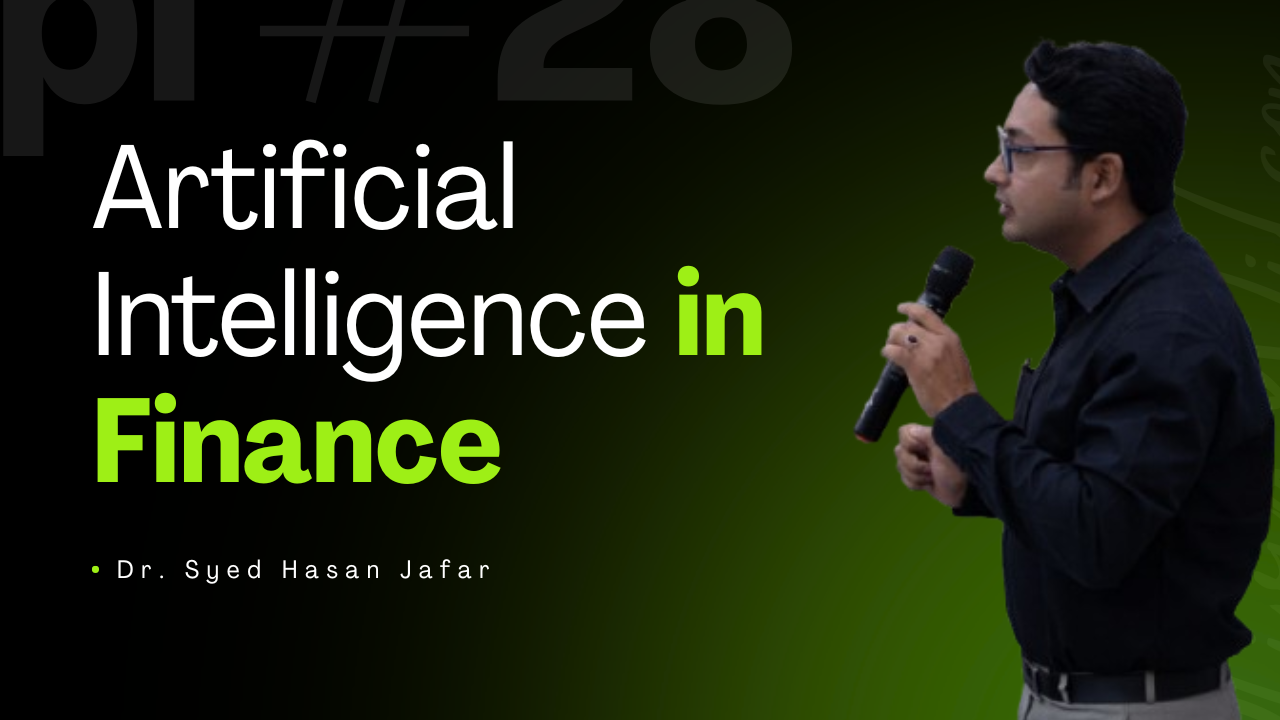
  • Artificial Intelligence in Finance

    Artificial Intelligence in Finance

    Artificial Intelligence in Finance
    Artificial Intelligence in Finance:
    Transforming the Future of Financial Decision-Making
    Keywords: AI in finance, financial technology trends, AI financial services, fintech innovation
    Introduction
    Artificial Intelligence (AI) is rapidly transforming the global financial ecosystem. From automated trading systems to fraud detection and risk analysis, AI-powered technologies are reshaping how financial institutions operate and how decisions are made. As financial markets grow increasingly complex, the integration of artificial intelligence in finance has become essential for improving efficiency, accuracy, and strategic insight.
    The Rise of AI in Financial Services
    Over the past decade, financial institutions have adopted AI-driven tools to manage vast amounts of data and deliver faster decision-making. Machine learning algorithms can now analyze market trends, customer behavior, and financial risks more efficiently than traditional models.
    Key applications include:
    Algorithmic trading and market forecasting
    Fraud detection and cybersecurity monitoring
    Credit scoring and loan assessment
    Personalized financial advisory services
    These technologies enable institutions to respond quickly to market changes while minimizing operational risks.
    Benefits of Artificial Intelligence in Finance
    The integration of AI provides several strategic advantages:
    1 Improved Risk Management – AI systems analyze historical data and predictive indicators to identify potential risks before they escalate.
    2 Enhanced Customer Experience – Financial institutions can offer personalized financial products using AI-driven analytics.
    3 Operational Efficiency – Automation reduces manual tasks, allowing financial professionals to focus on higher-value strategic activities.
    4 Better Market Insights – AI tools can detect patterns and anomalies that may not be visible through traditional financial analysis.
    Challenges and Ethical Considerations
    Despite its advantages, AI adoption in finance also raises important concerns. Algorithmic bias, data privacy, and transparency in automated decision-making remain critical issues that financial institutions must address. Ethical frameworks and regulatory oversight are necessary to ensure responsible use of artificial intelligence in financial markets.
    Conclusion
    Artificial intelligence is no longer a future concept in finance—it is a present reality. As financial institutions continue to embrace AI-driven technologies, the focus must remain on balancing innovation with ethical responsibility and regulatory compliance.

    Leave a Reply

    Your email address will not be published. Required fields are marked *

  • FinTech Innovation

    FinTech Innovation

    FinTech Innovation: Reshaping the Financial Industry
    FinTech Innovation:
    How Digital Technologies Are Reshaping the Financial Industry
    Keywords: fintech innovation, financial technology trends, digital banking, fintech transformation
    Introduction
    Financial technology, commonly known as FinTech, has revolutionized the financial services industry. By integrating digital technologies such as artificial intelligence, blockchain, and big data analytics, fintech companies are redefining how financial services are delivered to consumers and businesses.
    What Is FinTech?
    FinTech refers to the use of innovative digital technologies to enhance financial services, improve accessibility, and streamline financial transactions.
    Examples include:
    Mobile banking platforms
    Digital payment systems
    Blockchain-based financial networks
    Robo-advisory investment services
    These innovations are making financial services faster, more efficient, and more inclusive.
    Key FinTech Trends Transforming Finance
    1 Digital Banking: Online banking platforms allow customers to manage their finances conveniently without visiting physical branches.
    2 Blockchain Technology: Blockchain improves transparency and security in financial transactions, reducing fraud risks and operational costs.
    3 Robo-Advisory Platforms: Automated investment platforms provide personalized financial advice based on data-driven algorithms.
    4 Open Banking: Open banking allows financial institutions to share financial data securely through APIs, enabling innovative financial products and services.
    Impact on Financial Institutions
    FinTech innovation is forcing traditional financial institutions to rethink their business models. Banks and financial organizations must adopt digital technologies to remain competitive and meet evolving customer expectations.
    Conclusion
    FinTech continues to reshape the global financial ecosystem. As digital innovation accelerates, financial institutions must embrace technology while maintaining strong governance and security frameworks.

    Leave a Reply

    Your email address will not be published. Required fields are marked *